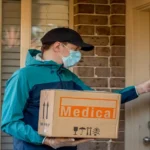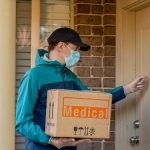

Home care has evolved from being an add-on to the healthcare system, to becoming the anchor of the healthcare system. Patients are able to recover from surgeries while in the comfort of their own homes; patients can use connected devices to help them manage their chronic illnesses; and patients can receive intravenous infusions right in their kitchens. All of these occurrences require that something physical arrives on time, at the proper temperature, and into the correct hands. Therefore, all of the logistics trends healthcare 2027 should be discussed in every B2B leadership meeting, rather than simply added as items on the operations team’s agenda.
We’re looking ahead in this updated guide rather than looking back. We’ve identified five forces which are changing the way a medical courier, a pharmacy, a lab, a home care agency and an HME provider deliver products and information to patients.
This guide is intended for those responsible for making decisions (e.g. administrators, supply chain managers, operations managers, and senior executives) about which companies to partner with, how much to spend on various projects, and which technologies to implement. Each of these trends is accompanied by a brief explanation of what is changing, why this change is significant, and what actions you should take in response to this trend. You will not see any “hype” in this guide; rather, you will receive real-world advice based upon the challenges faced by healthcare providers each day in delivering patient care.
Why These Shifts Matter Now
The logistics of healthcare have always been disguised. When a medication is left too long in a warm vehicle, it loses its effectiveness. When a sample arrives at the lab too late for testing, the test must be redone, delaying the patient’s diagnosis and causing frustration to the patient. If a hospital bed or an oxygen concentrator does not reach a patient’s residence until a day later than scheduled, the patient will remain hospitalized longer. In each of these situations, the clinical results of healthcare depend upon the logistics outcomes.
Three pressures now compound that dependency.
The first trend is that health care is being provided outside of traditional hospital environments. All stakeholders – insurers (payers), healthcare organizations (providers), and individuals receiving care (patients) – want to receive care in less expensive, more convenient locations; therefore, receiving care at home is rapidly becoming a preferred option for many people. The second trend is that as technology advances, the types of items delivered to patients’ homes become increasingly sophisticated. While providing a patient with a supply of generic medication requires little special handling, the delivery of biotechnology products, specialty medications, and devices that connect to the Internet requires a high degree of control over the shipping process. Finally, as consumers and regulatory agencies require accountability, they are demanding evidence of the product’s journey from manufacture to delivery. Consumers and regulators are looking for documented evidence regarding the location(s) the product was shipped from, the person(s) who handled the product, and the environment(s) encountered by the product during transit.
The combination of these factors is why healthcare logistics trends for 2027 will be significantly different than anything the industry was able to do in just the last three years. Organizations who view logistics as a back-office expense will have a difficult time. Organizations who view logistics as an integral part of the patient care experience will generate referrals, maintain their bottom line, and build trust with patients.
Let us look at the five trends in detail.
Trend 1: Home Care Delivery Becomes the Default Care Path
What is changing
Beginning in 2027, home care delivery is no longer just an additional option for those who receive hospital-based care. Instead, home care delivery is becoming a primary choice for a larger percentage of patients. Hospitals-at-home continue to grow. Home-infusion, wound-care, respiratory-therapy, and post-acute-rehabilitation are all shifting from clinical settings to patients’ homes. Finally, health systems are discharging patients earlier from hospitals with the confidence that the necessary supplies and equipment will be available to patients upon their arrival at home.
The trust is dependent upon logistics. A discharge plan will only be effective if the walker, dressing kit and initial week of medication are available prior to the arrival of the patient, or within the first day.
Why it matters for your operation
The traditional distribution model assumes there are only a small number of drops (hospitals, clinics, and pharmacies) in the area. Home care models will replace those limited drop-offs with thousands of individual home delivery locations. Each of these homes can have its own unique physical access issues: gated communities, multi-story apartments that lack elevators, rural road conditions, and the potential that residents may not immediately respond to the door.
This means route density goes down, cost per stop goes up, and customer expectations go up. You can’t just add more trucks to fix this problem. You need better ways to dispatch, flexible times for delivery and drivers that know they are going into the patients home.
The human side of medical delivery
This trend also alters the individuals that provide the delivery. Books can be delivered to the patient’s front door. Prescription drugs and other types of medical equipment cannot. Many patients (especially those who are elderly) prefer to have a professional delivery person deliver products to them. This professional delivery person should confirm the identity of the patient; inform the patient as to what was delivered; and leave the home without causing damage. Professional delivery personnel that demonstrate both empathy and professionalism will function as extensions of the clinical team.
Therefore, decision makers need to ask themselves a different question as to what to look for when selecting a medical courier. Rather than asking “How long will it take for me to receive my order?”, they should inquire about “How will you manage to deliver the package into a patient’s home?”
What to do
- Map your patients geographically, as well as by how they receive their health care, then determine which areas are densely populated enough to support regular scheduled transportation, versus which areas would be better served with an on-demand service.
- Require background-screened, HIPAA-trained drivers for every home delivery.
- Build confirmation processes into your workflow. For example, use identity verification, capture signatures or take photos, and have a brief handoff script.
- Offer patients two-way notifications so they know when to expect a driver.
Trend 2: Cold Chain Logistics Reaches the Front Door
What is changing
In the past, pharmaceutical logistics were primarily concerned with the transport of temperature-controlled items from the manufacturer to the distributor and ultimately to the hospital. All of these areas have specialized facilities (i.e. refrigerated warehouses), validated storage systems, and staff who are trained in the handling of these types of products. The last leg of the journey, delivery to the patient’s residence, has been a relatively uncommon occurrence.
Now, it’s common practice. Many specialty drugs, biologics, vaccines, insulin products, and several different types of infusion therapies need to be stored in either a refrigerated state or in a controlled room temperature environment from when they’re first placed on the pharmacy shelves until they’re delivered to a person’s home and put into their own refrigerator. Since so many of these therapies will eventually be administered at home, the cold-chain logistics used to deliver them to the pharmacy must continue to be implemented during the “last-mile” delivery process, which can often be unpredictable.
Where cold chains break
The vast majority of temperature excursions occur in “the gaps” of the supply chain. These gaps may include a courier leaving a temperature controlled container inside their hot car while making multiple deliveries; a package sitting outside on a porch during the heat of July; or a patient’s delivery being delayed due to the fact that they are not available to receive it. All of these gaps create risk, and each risk has the potential to destroy some of the most expensive products available.
Leading providers respond with three practices.
- Validated Packaging. Temperature profiles used to evaluate coolers, gel packs and insulated shippers are based upon actual temperatures encountered in the field rather than the idealized conditions found within a laboratory setting.
- Continuous Monitoring: Data Loggers/Connected Sensors are placed within the shipment to allow for a continuous display of all temperature readings during transit (from pickup to delivery).
- In addition to using temperature controlled vehicles for the delivery of sensitive items, they have also provided training for all of their drivers so that they can adhere to specific procedures when delivering such products..
Compliance pressure keeps rising
Regulators and accreditations are increasing their requirements for product integrity and traceability. When pharmacies ship drugs directly to patients, they will be required to demonstrate how they maintain the quality of the drug from when it leaves the pharmacy until the time it arrives at the patient’s home. It is anticipated that auditors and payers in 2027 will require more detailed information regarding documentation related to the final mile of delivery than was previously required.
The messages are simple; leaders who are following the trends in healthcare logistics up until 2027 will find that the messages are simple; cold chain logistics has transitioned from being a niche area of specialty service to a foundational capability required of every organization providing patient care in-home.
What to do
- Audit each of your current temperature-sensitive shipments and identify all handoff points that occur from when the product leaves the pharmacy until it arrives at its final destination with the patient.
- Request documented procedures, driver training logs, and response plans for excursions from your courier partner.
- Pilot sensor-based monitoring on your most expensive treatments first, and then scale-up after you have seen the benefits.
- Create a well-defined protocol for the handling of a failed delivery when the product will need to be returned to the pharmacy.
Trend 3: Real-Time Visibility Becomes a Contract Requirement
What is changing
Real-time visibility into the movement of a customer’s product (such as a pizza) from the time it leaves the store until it arrives at their home is becoming a standard feature that healthcare organizations are requiring of their suppliers. Healthcare buyers are also looking for detailed information regarding the whereabouts of a specimen, a medication, or a medical device. This level of transparency will be a basic requirement of all contracts and RFP’s by 2027.
Visibility in the medical supply chain is about much more than just a pin on a map. Visibility involves tracking where supplies go (chain of custody), when they were scanned (timestamp), how cold/hot they stayed (temperature data), that the right amount was delivered to the correct location (proof of delivery), being able to tell you if something went wrong (exception alert), and having all this work seamlessly with the systems your employees are currently using.
Why data integration matters most
Many organizations have begun to track information about products/services; however, there is a challenge in how organizations use this information. For example, a courier submits status updates into a single portal, while the pharmacy operates with a different system, and the home care agency relies on telephone calls for communication. As a result, staff members spend many hours searching for answers to a simple question: “Where is my item?”
Integration addresses this issue. When courier information moves into your dispatch, pharmacy, or electronic health record (EHR) processes, you eliminate multiple entries and decrease response times. Your employees will be able to identify a delay while there’s time to resolve it. Your patients will have an accurate window for when their packages will arrive rather than just a general promise.
Predictive tools add a new layer
In addition to tracking, advanced logistics teams have evolved into predictive teams. They utilize past delivery performance, congestion on roadways, and weather forecasts to predict delayed deliveries and reroute drivers prior to potential problems developing. In addition, these teams evaluate those locations that consistently fail to receive delivery, then adjust delivery schedules as appropriate. The tools used by these teams are not intended to replace human decision making. Rather, they provide dispatchers with additional information allowing them to make decisions more quickly.
Security and privacy cannot lag behind
More data results in more obligations. Each tracking occurrence could involve protected health information, therefore providers must protect it. Seek out partners that restrict access to data, record encryption and educate employees regarding privacy regulations. Transparency is becoming a trend for healthcare logistics by 2027; therefore, the most successful organizations will combine transparency with effective privacy control measures.
What to do
- Prior to issuing your Request For Proposal (RFP), please define what kind of visibility features you are looking for (e.g. scan events, photo documentation, temperature readings and exception alerts).
- Ask about the integration options (API or File Based) that can be used with your current system.
- Measure service-level metrics for on-time delivery, exceptions, and data quality. Then, assess your performance on these metrics every month.
- You should verify that your partner is compliant with all of the HIPAA requirements on each of their systems which have access to patient data.
Trend 4: Lab Specimen Transport Goes Decentralized
What is changing
The hub and spoke model of laboratory specimen transportation is well-established. When patients have blood drawn at a collection site or in the hospital, the sample is sent via courier to the central laboratory according to a predetermined schedule. While this method is still used today, there are additional considerations when providing care for patients in their homes.
The mobile phlebotomist, the at-home blood draw kit, the remote patient monitor and the clinical trial being done in the patients’ homes will produce a sample that was taken from a patient who is not located within a traditional healthcare setting. There is a time limit associated with each of these samples. Many can be held at room temperature for hours. However, there are some types of samples that must be refrigerated, processed quickly or handled in a specific manner to maintain the integrity of the data produced by the sample.
The scheduling challenge
Decentralized collection results in an unpredictable need for services. For example, a phlebotomist may complete a blood draw at 2:15 p.m., in a suburban area, where the first available courier service will not arrive until later that night. Or, a home health nurse could obtain a sample (culture) that requires immediate delivery to a laboratory located on the other side of the city. Fixed route transportation systems cannot accommodate these fluctuations in service requirements without resulting in delays.
As such, there is a growing trend among laboratories and healthcare providers to utilize flexible medical courier services which offer both scheduled pickup times as well as on-demand and STAT (immediate) pickup options. These organizations are looking for a single provider that will be able to perform a routine pickup on a daily basis and also accommodate an immediate request for service at the end of the day, using the exact same documentation standards.
Quality starts at pickup
Small details, such as proper labeling, secure packing, biohazardous compliance, correct temperature and accurate time stamp, will affect the integrity of a specimen. The courier responsible for transporting lab specimens should receive training in Bloodborne Pathogens Safety, Department of Transportation (DOT) Shipping Regulations for Diagnostic Specimens, and Proper Spill Response.
A mentality of treating each tube as the answer for the patient is required. When a result is delayed, a treatment plan can be put off. If a sample is rejected, then there will be an additional needle stick. Trustworthy shipping will provide protection for both clinical accuracy and the patient’s experience.
What to do
- Review your collections on a daily basis and on a weekly basis, then look at how they align with your present courier schedule.
- Add an on-demand and/or stat service level for those samples which are collected in areas that do not fall within the typical collection route.
- Confirm that your courier company provides training for its drivers regarding the safe handling of specimens, bio-hazards, and the rules of shipping.
- Track the rate of rejections and the amount of time it takes to get results from tests, then link how well your logistics are doing to how good your laboratory is.
Trend 5: HME Logistics and Supply Chain Resilience Merge
What is changing
Home medical equipment (HME) suppliers provide all types of home medical supplies such as oxygen concentrators, hospital beds, wheelchairs, CPAP devices, etc., through delivery, installation, servicing, and retrieval. HME is one of the most operationally challenging areas within the health care industry. It involves providing patients with large pieces of equipment, educating patients on how to use the equipment, creating and maintaining required regulatory documentation, and performing ongoing maintenance of the equipment.
The same pressures that are causing changes in the industry (the need for change) will be joined by another pressure in 2027: resilience. The recent past showed us how quickly a supplier, warehouse, or transportation route can go wrong during critical times. Therefore, providers of the healthcare supply chain are designing their systems to be resilient against disruptions rather than just efficient.
Equipment moves in two directions
HME logistics has a different approach than simple package delivery; the service is ongoing beyond the customer’s front door. Teams have to bring the equipment to the customer, teach them how to use it, collect the equipment when the therapy is over, clean and assess the condition of the equipment, then put the equipment back into the system. All of these steps generate tracking, labor and transportation requirements. Equipment that remains in a customer’s home after their treatment is finished is quietly costing money and inventory.
Smart operators will make investments in more efficient retrieval procedures. They will use scheduling for proactive pickup of their items, maintain a digital record system to identify idle equipment, and coordinate with outside delivery/service providers that can be scaled up during high volume times.
Building resilience into the supply chain
A robust medical supply chain doesn’t need to stock as much as possible. A robust medical supply chain needs choices. Here are some of the ways you can make that happen:
- Develop a diverse base of both suppliers and carriers. Establish and maintain relationships with back-up vendors and secondary courier partners for all of your key routes.
- Move products closer to where they are being demanded. Consider using local storage facilities or partnering with other companies to reduce product transit times when there is an increase in customer orders.
- Cross-train employees, and use flexible scheduling to meet peak demands. Partner with companies that have additional drivers and/or vehicles available to handle short-term increases in volume.
- Plan for extreme weather and other emergency situations. Create response plans (playbooks) for events such as extreme weather conditions, electrical blackouts and fuel shortages before the event occurs.
Sustainability enters the conversation
In today’s market place, more and more customers are asking questions about the ecological effect of products, with logistics contributing significantly to this area. By optimizing routes, using the appropriate sized vehicles, and utilizing reusable packaging, companies can lower their environmental impact as well as decrease expenses. By 2027, sustainability will seldomly be the sole reason why a customer chooses one supplier over another, however, it will frequently serve as the deciding factor when choosing among multiple suppliers who have met all of the required criteria.
What to do
- Find out what is the single point of failure within your equipment and/or supply flow, and create a back-up plan for each.
- Review the way you retrieve equipment, and establish goals on when you would like to have the equipment back into stock after a patient completes their therapy.
- Evaluate potential external delivery and maintenance providers on how well they can accommodate high volumes of business at certain times throughout the year (such as holidays).
- Ask vendors how they reduce miles, packaging waste, and idle time.
How to Prepare Your Organization
When trends are useful, it is because they lead to a change in how people make decisions. You can use the following model to turn the health care logistics trends that will emerge by 2027 into a plan of action for your team.
Step 1: Audit your current state
Start with the data. Measure the number of on-time deliveries, the number of missed deliveries, the number of instances when the temperature went outside the specified range, how often specimens were rejected, how quickly you retrieved equipment, and customer complaints. After that, determine which area of each measurement did not meet your expectations. Without a reference point (baseline), it will be difficult to demonstrate that you are making progress toward improving your service or justifying additional investments in your service.
Step 2: Segment your deliveries
The service you provide should depend upon the type of shipment you are sending. You may want to group your shipments based on their needs. These groups could include: routinely scheduled, time-sensitive, STAT (immediate), temperature controlled, and/or high-value/high-risk. After you have grouped your shipments, determine the appropriate service level and associated cost for each group. By doing so, you can avoid paying too much for regular, routine work and too little for time-critical, high-priority shipments.
Step 3: Choose partners for capability, not just price
When evaluating potential partners (couriers/logistics companies), make sure to look at their per-stop rates. A low per-stop rate may seem appealing at first glance; however, if it results in missing deliveries and subsequently causing patients to complain about products being lost, it will ultimately cost you more than you saved.
- Driver screening, training, and retention
- Documentation, chain of custody, and proof of delivery
- Temperature control and monitoring capabilities
- Technology integration and reporting
- Insurance coverage and compliance history
- Capacity to flex during peaks
- Communication style and escalation process
Step 4: Align technology and workflows
Technology can help the most when it is integrated into your workflow. Create a map of every stage in the process of ordering through to delivering products/services and find out where there may be delays in accessing data. After that, collaborate with your partners to automate status updates, exception alerts, and reporting. In many instances, small improvements to the way different systems integrate can result in saving more time than making large-scale purchases of software.
Step 5: Train and communicate
Every single one of the above trends relies upon the people. To develop internal employees’ understanding of logistics constraints, and to develop external partner organizations’ understanding of clinical priorities. Conduct periodic reviews in which each party discusses the successes and failures of their previous work together, along with suggestions for improvement. When there is honest communication between two or more parties, strong partnerships can be developed.
Quick-reference summary
| Trend | Core Challenge | First Action |
| Home care delivery growth | Scattered addresses, higher cost per stop | Map patient geography and delivery types |
| Cold chain logistics expansion | Temperature risk in the last mile | Audit handoff points and add monitoring |
| Real-time visibility | Disconnected tracking data | Define visibility requirements and integrations |
| Decentralized lab specimen transport | Unpredictable pickup demand | Add on-demand and STAT service tiers |
| HME logistics and resilience | Two-way equipment flow and disruption risk | Eliminate single points of failure |
What This Means for Your Courier Partnership
All five trends have one thing in common: each trend raises the expectations of the partner that will stand between your business and your patients. A medical courier in 2027 will do much more than drive. An exceptional partner will protect the quality of products, document each transfer, communicate with you before issues occur, and represent your brand when delivering to a patient’s home.
When you are evaluating potential partners based on how well they align with the 2027 healthcare logistics trend predictions that will impact your organization’s overall business strategy, use these questions as part of your evaluation process:
- How are drivers trained on the processes of delivering items to customers’ homes, managing samples/specimens, and transporting products that must be temperature controlled?
- What data can you share with us, and how does it connect to our systems?
- What do you do when a delivery is unsuccessful, there is a temperature deviation from the acceptable range, or the quantity of goods demanded increases beyond your expectations?
- Can you support routine, STAT, and on-demand service under one agreement?
- How do you protect patient privacy at every step?
A partner who is certain of their ability to answer the above questions will provide you with specific answers to your inquiries, rather than slogans. To get an idea of how MSI addresses the above issues, please visit our Services page to find additional information regarding Medical Courier Services, Lab Specimen Transport, Pharmaceutical Logistics Services, and HME Support Services. Additionally, if you would like to gain further insight into the way in which our team operates and what we believe in, please refer to our About MSI page.
The growth of home care can be attributed to several factors. Patients seek the convenience of receiving care at home. Providers look for ways to increase their operational efficiencies. Payers are seeking the best return on investment for the dollars they spend. All of these factors are supported by logistics. Those organizations that can view the process of delivering services as an integral component of providing care rather than a cost to be minimized, will be most successful.
The healthcare logistics trends 2027 will communicate a simple idea. Get closer to the patient; ensure each product travels safely to its destination; use data to illustrate what you’ve done; answer to demand where ever it is present; create a supply chain that can bend rather than break. All of these ideas are not going to occur in an instant. But, as long as you continue to make improvements during the course of the current year, you are building a stronger and more reliable operation for the following year.
Begin by conducting a truthful assessment of where you stand; select two or three top priority items to focus on first; find other individuals/groups that have similar expectations as yourself. Next, evaluate the results of what you’ve done; make adjustments as needed; continue moving forward.